The SUMIFSfunction, one of the math and trig functions, adds all of its arguments that meet multiple criteria. For example, you would use SUMIFS to sum the number of retailers in the country who (1) reside in a single zip code and (2) whose profits exceed a specific dollar value.
The Excel SUMIFS function returns the sum of cells that meet multiple conditions, referred to as criteria. To define criteria, SUMIFS supports logical operators (>,<,<>,=) and wildcards (*,?,~), and can be used with cells that contain dates, numbers, and text.
To use the SUMIFS() function in Excel: Type =SUMIFS( to begin the function. Select the range that contains the values to sum. Select the range where the condition will be applied. Enter the condition to match. Close the parentheses and press Enter. Here, I have summed up all the sales that are greater than 200.
Microsoft Excel'sSUMIFSfunction calculates the sum of values in a range of cells based on multiple conditions. It avoids the need for complex filtering, and its conditions can be numbers, text, or dates, making it great for dynamic data analysis.
Learn how to use the SUMIFSfunctioninExcel with this step-by-step guide designed for all skill levels. We’ll start by introducing the SUMIFSfunction, explaining its syntax and how it differs from the basic SUMIF formula.
By adding the results of several SUMIFfunctions and by using SUMIF formulas with array criteria, as demonstrated in the examples that follow. You use SUMIFS in Excel to find a conditional sum of values based on multiple criteria.
Purpose of the SUMIFSfunction in Excel. The SUMIFSfunction in Excel helps to sum values based on multiple criteria or conditions. It allows you to filter and add up only the values that meet the specified criteria, making it a powerful tool for data analysis and reporting.
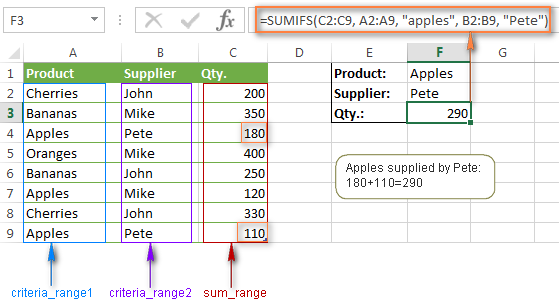 By adding the results of several SUMIF functions and by using SUMIF formulas with array criteria, as demonstrated in the examples that follow. You use SUMIFS in Excel to find a conditional sum of values based on multiple criteria.